the beauty broth

this is not a stock you make in an hour. the bones are browned first, until they are dark and the pot smells of roasting, and only then does the water go on. then it sits on the lowest heat you have for as long as you can give it. what comes out is not a thin soup. it sets in the fridge like a soft jelly, and that setting is the whole point.
what you need
- beef bones, enough to cover the bottom of your pot. marrow bones and bones with some meat still on
- chicken bones can go in with them, or instead
- 2 red onions, quartered
- 3 carrots, in thick pieces
- 3 sticks of celery
- a large bunch of flat leaf parsley
- 1 whole head of garlic, cut across
- a thumb of fresh ginger, sliced
- a thumb of fresh turmeric, sliced
- salt and pepper
- water to cover
- a little oil for browning
- a big pot with a lid, or a slow cooker
the ritual
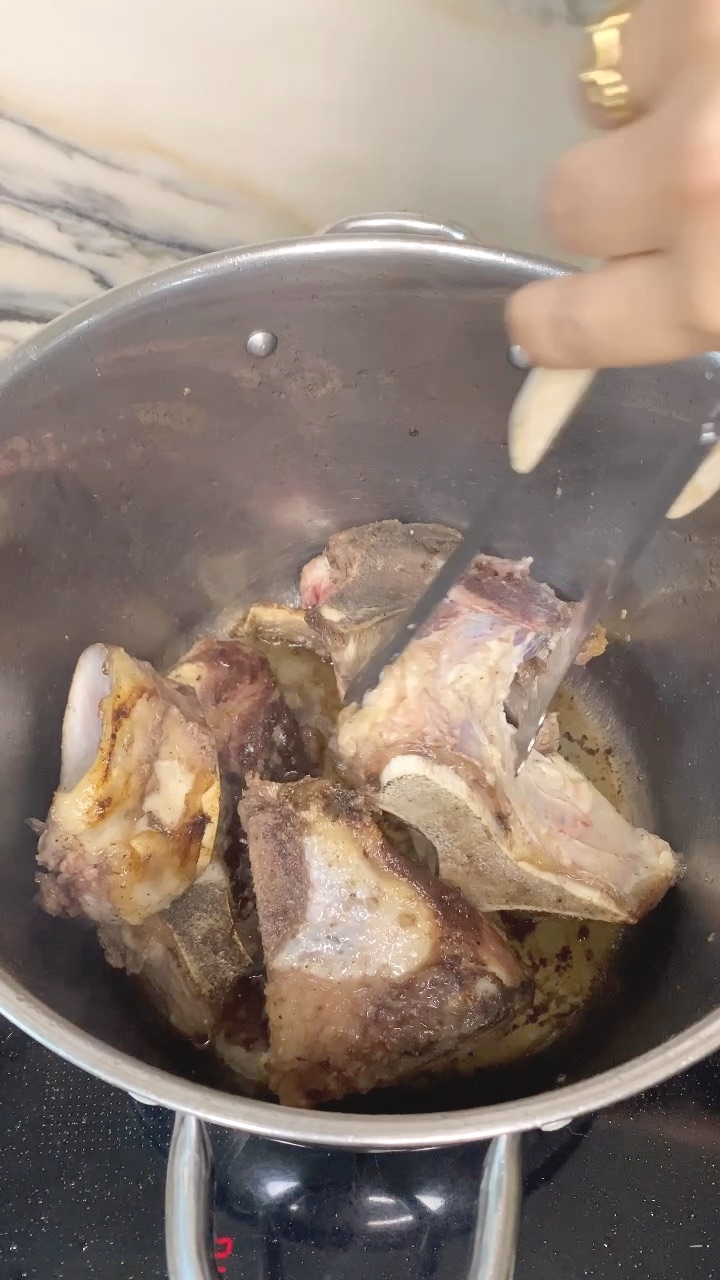
- heat a little oil and brown all the bones, on every side, until they are dark and the kitchen smells of roasting. do not rush this. it is where the colour and the depth come from.
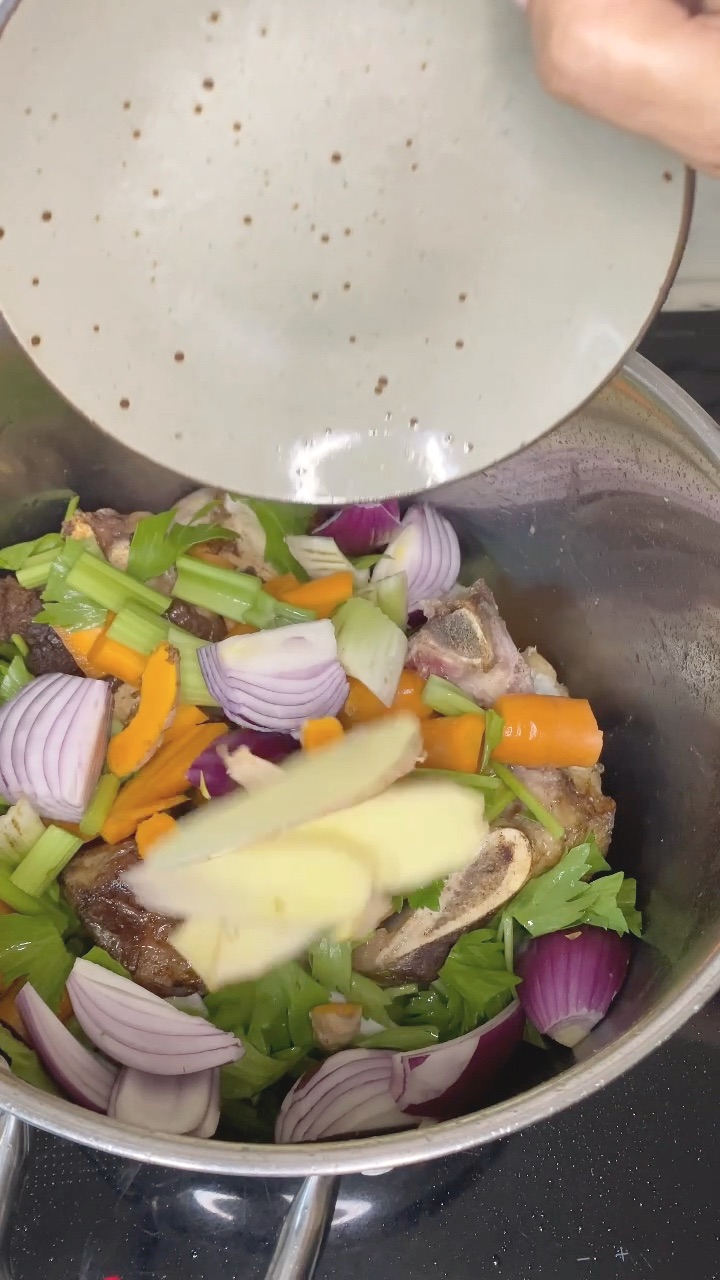
- put the onion, carrot, celery, parsley, garlic, ginger and turmeric in on top of the bones.
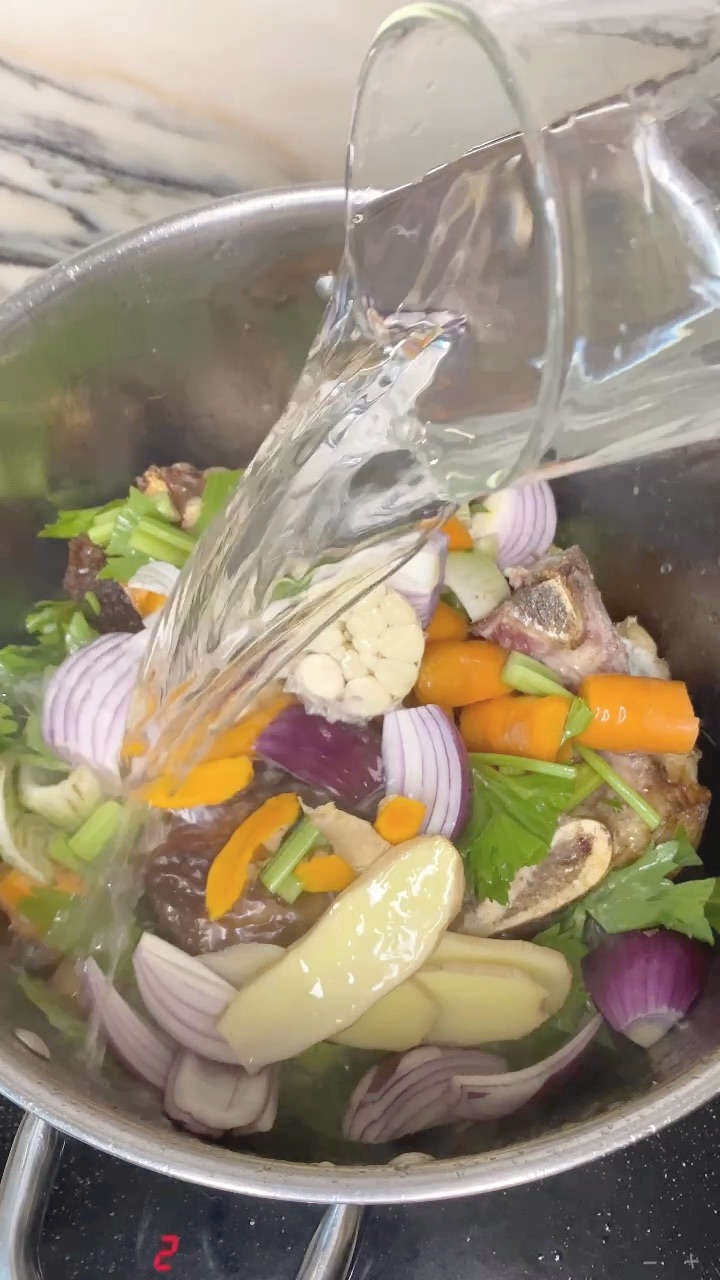
- pour in water until everything is covered.
- bring it up, put the lid on, and turn it down to the lowest heat you have. a whole day is best. six hours is the least it needs. a slow cooker is made for exactly this.
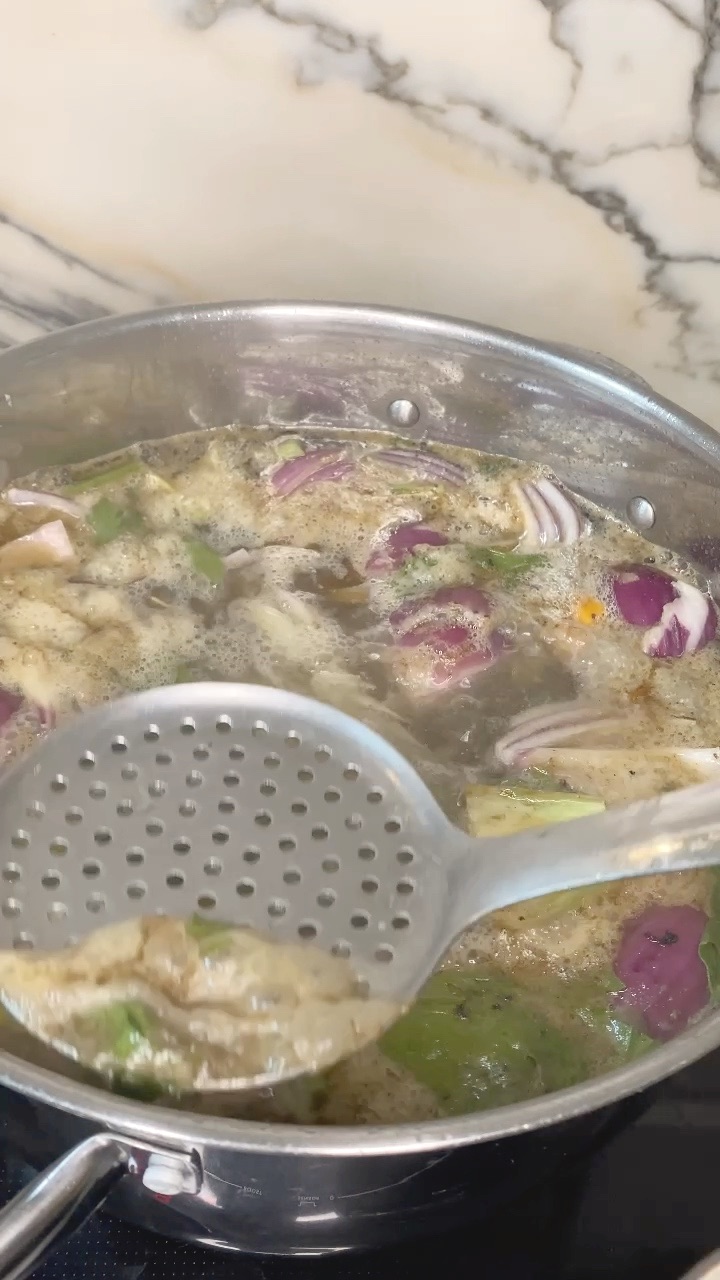
- in the first hour a grey foam comes up. skim it off with a slotted spoon and throw it away.
- salt and pepper at the end, when you can taste how strong it has become.
- strain it, and let it cool right down, in the fridge overnight.
- a layer of fat will have set hard on top. scrape it off and throw it away. it sits heavy on the stomach if you leave it in.
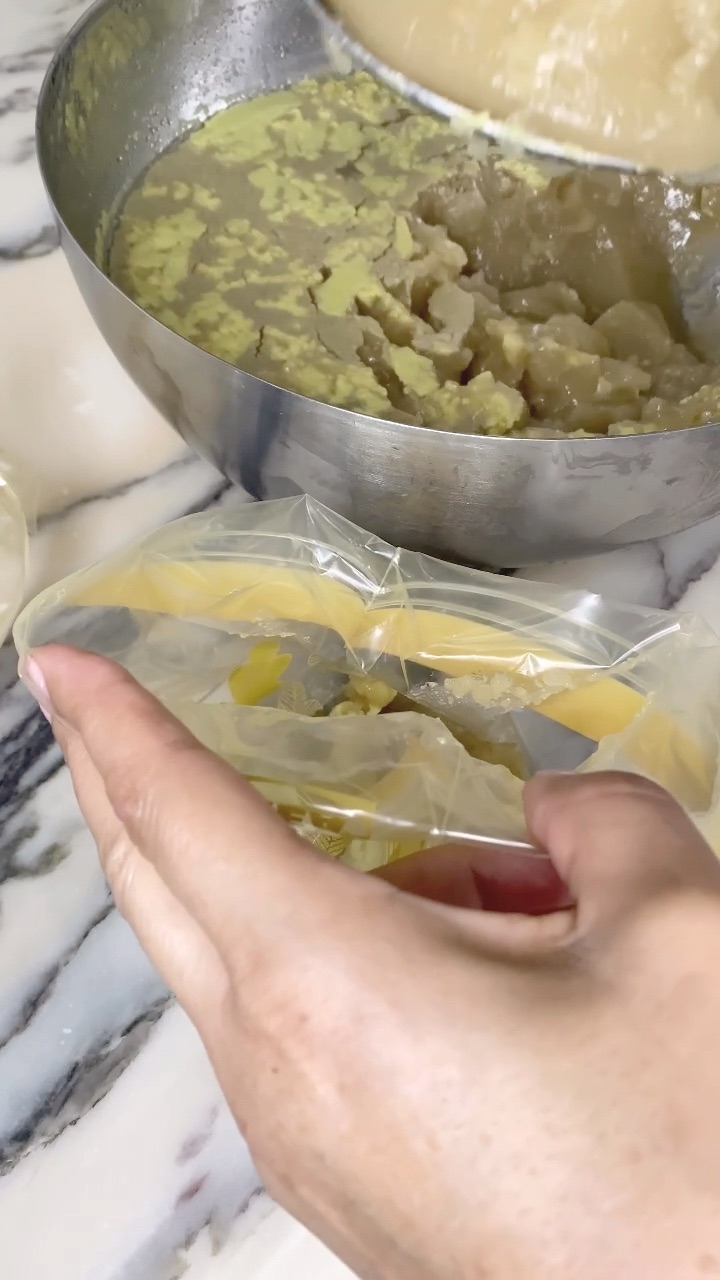
- what is underneath is the jelly. that is what you portion, flat into freezer bags, stacked. flat bags thaw in minutes.
the sign
leave it in the fridge overnight and you will see two layers. a pale hard cap of fat on top, which you scrape off and throw away, and underneath a soft jelly you can lift with a spoon. that jelly is the gelatine, out of the bones and into the water, and it means you did it right. if it stays liquid it wanted more hours, or more bone.
about vinegar
many recipes tell you to add a splash of vinegar, on the reasoning that acid helps draw the minerals out of the bone. i do not use it, and this is written the way i make it. if you want to try it, a tablespoon goes in with the water. the evidence that it changes much is thinner than the confidence with which it is repeated.
how to drink it
a warm mug in the morning, or a cup sipped through the day. it is also a base: use it instead of water in soup, in rice, in anything that would otherwise be made with a stock cube.
what it gives
the benefits people look for when they learn how to make bone broth are collagen and minerals. here is what is honestly in the cup. the gel is gelatine, and gelatine is mostly glycine. a home made cup of around 250 ml carries somewhere between 800 and 1600 mg of it. that is a real amount, and it is roughly double what most shop bought broth measures.
and now the honest part. bone broth is often sold as a collagen drink. when researchers compared broth against collagen supplements they found much less of the building blocks in the broth, and the amounts varied a lot from batch to batch. the same goes for minerals: often claimed, rarely measured, and low when they are. so make it because it is warm, savoury, and made by your own hands from something that would otherwise have been thrown away. not because a label promised you skin.
a note of care
bone broth has real side effects for a few people, and most of what follows is about who should ask first.
histamine. a long simmer makes a broth high in histamine. around one person in a hundred does not tolerate it well, and it shows up fast: a flushed face and neck, a headache, a racing heart, a blocked nose, within an hour. if that happens to you, this is why.
glutamate. the same long simmer releases glutamate. some people are sensitive to it. there is not enough research to say more than that.
where the bones come from. bone is where an animal stores heavy metals, lead among them. a 2017 study found the amount in a serving of broth is small, a few micrograms. still, this is a reason to buy from a butcher you trust and to choose pasture raised where you can.
how long it keeps. get it cold within two hours of cooking. it keeps three to five days in the fridge in a closed jar, and up to six months in the freezer.